Audio, Video, Staging & Interpretation
Executive Summary
Modern conferences depend on professional audiovisual (AV) systems to communicate ideas clearly, engage audiences, and support hybrid participation. From crystal-clear audio and immersive visuals to stage lighting, interpretation, and live streaming, AV for conferences is no longer a background service—it is the foundation of the conference experience.
This guide provides a practical, real-world framework for planning and executing conference AV for events of all sizes, from executive meetings to large-scale international conferences. It is written for corporate event planners, production managers, conference organizers, and AV procurement teams who need reliable guidance grounded in real production environments—not theory.
Why AV Is the Backbone of Modern Conferences
In today’s conference landscape, AV determines how well your message is heard, seen, and remembered. Conferences are no longer built around a single microphone and projector. Audiences now expect consistent audio, high-resolution visuals, professional lighting, and seamless hybrid experiences.
Whether you are hosting a leadership summit, a multi-track corporate event, or a global conference with multilingual attendees, your AV strategy directly affects engagement, credibility, and outcomes. Delivering this experience requires an integrated AV ecosystem—one that aligns audio, video, lighting, staging, interpretation, and digital platforms into a single production environment.
What Defines a Modern Conference AV Setup?
A modern conference is a multi-sensory, multi-platform experience. Five core elements define today’s AV ecosystem.
1. High-Definition Audio & Speech Intelligibility
Audio clarity is non-negotiable. Every attendee must hear speakers clearly, regardless of room size or seating position. Professional audio systems ensure even sound distribution, eliminate feedback, and maintain intelligibility across multiple rooms.
Industry-standard brands such as Shure, Sennheiser, QSC, and JBL Professional are widely used in corporate environments for their reliability and consistency.
2. Visual Experiences That Enhance Engagement
Visual systems support content delivery, branding, and hybrid participation. LED video walls, high-lumen projectors, multi-display layouts, and live camera feeds help maintain audience focus and ensure visibility in all lighting conditions.
Trusted visual brands include Barco, Epson, Panasonic, Absen, and Samsung, commonly used for enterprise-grade conferences.
3. Professional Lighting for Stage Presence
Lighting shapes visibility, mood, and brand perception. Corporate conferences rely on balanced stage wash lighting, key lights for camera clarity, and ambient lighting to enhance the environment without distraction.
Manufacturers such as Chauvet Professional, ETC, and Martin are commonly used for corporate and broadcast-friendly lighting.
4. Purpose-Built Stage Design & Rigging
Staging impacts sightlines, speaker comfort, camera angles, and audience engagement. Modular stages, risers, podiums, truss systems, and branded backdrops must be safe, scalable, and visually consistent across sessions.
5. Hybrid & Virtual Integration
Most conferences now include live streaming, remote presenters, or virtual attendees. Integrated systems built on Blackmagic Design, vMix, NDI, Zoom Rooms, and enterprise streaming platforms ensure smooth transitions between in-room and remote participation.

Core Components of Professional Conference AV
A well-designed AV system integrates multiple technologies into a unified solution.
Audio Systems
Audio is the most critical element of any conference. Even the most visually impressive event fails if attendees cannot hear clearly.
Microphone Types
- Wireless handheld microphones for keynotes and Q&A
- Lavalier microphones for hands-free presenters
- Headset microphones for workshops and active speakers
- Podium and gooseneck microphones for formal sessions
- Boundary or tabletop microphones for panels and board meetings
Speakers & PA Systems
Conference sound systems are selected based on room size and acoustics. Line arrays are used for large spaces, while point-source or column speakers suit smaller rooms. Proper tuning ensures consistent coverage and speech clarity.
Audio Processing
Professional mixers, DSP processors, and feedback suppression systems manage multi-speaker environments and complex routing.
Visual Display Systems
Visual technology supports presentations, branding, and hybrid participation.
LED Video Walls
LED walls are the preferred solution for medium to large conferences. They provide high brightness, seamless visuals, and flexibility in size and layout—ideal for keynotes and live camera magnification (IMAG).
Projectors & Screens
High-lumen laser projectors remain a cost-effective choice for breakout rooms and smaller sessions where ambient light can be controlled.
Large Format Displays
Commercial TV displays are commonly used for registration areas, breakout rooms, digital signage, and confidence monitors for presenters.

Cameras & IMAG
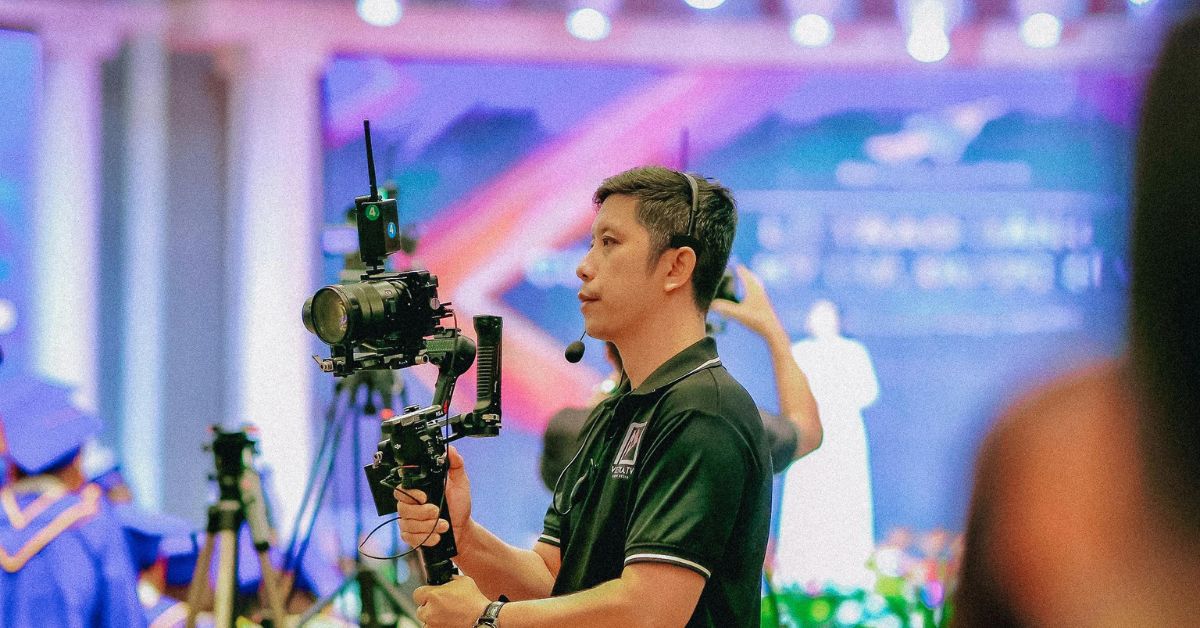
Cameras enhance visibility for large audiences and enable hybrid participation. PTZ and broadcast cameras capture speakers for screens and live streams, ensuring consistent visual quality for both in-room and remote attendees.
Lighting Solutions
Lighting improves visibility, energy, and broadcast quality.
Stage wash lighting ensures even illumination
Key lights and spotlights highlight speakers
Ambient lighting reinforces branding and atmosphere
Moving head fixtures support dynamic transitions for large events
Well-designed lighting enhances both live and on-camera presentation.
Stage Design & Rigging
Stage design influences engagement and professionalism.
Modular staging platforms allow flexible layouts
Podiums may integrate microphones, monitors, and branding
Backdrops reinforce visual consistency
Truss and rigging systems support lighting, audio, and scenic elements
All staging and rigging must meet safety standards and venue requirements.
Interpretation Systems
International and multilingual conferences rely on simultaneous interpretation (SI).
SI systems include interpreter booths, consoles, transmitters, and attendee headsets. These systems integrate with main audio and streaming feeds to ensure every participant receives content clearly in their chosen language. Brands such as Bosch, Audipack, and Williams AV dominate this space.
Common Conference AV Challenges & Professional Solutions
Even well-planned conferences face technical risks.
Poor Audio Quality
Caused by incorrect mic selection, poor speaker placement, or untuned systems. Solved through professional equipment, room-specific calibration, and backup microphones.
Washed-Out Visuals
Often due to low-brightness displays or high ambient light. Solved with LED walls or high-lumen projectors and proper screen sizing.
Lighting Glare & Washout
Resolved using directional fixtures, balanced color temperatures, and coordinated lighting cues.
Hybrid Connectivity Issues
Solved with dedicated wired internet, bonded cellular backup, redundant encoders, and a dedicated hybrid technician.
Live Technical Failures
Professional AV teams plan redundancy—backup microphones, laptops, switchers, cables, and power.
Venue Limitations
Managed through advance site surveys, ground-supported truss systems, and supplemental power distribution.

AV Packages by Conference Size
Small Conferences (20–80 Attendees)
Designed for meetings, workshops, and training sessions. Includes basic wireless microphones, compact speakers, a projector or large display, simple lighting, and one AV technician.
Medium Conferences (100–300 Attendees)
Supports multi-speaker sessions with LED walls or high-lumen projection, multi-microphone setups, stage lighting, modular staging, optional interpretation, and a multi-person technical crew.
Large Conferences (500+ Attendees)
Built for leadership summits and international events. Features full line-array audio, large LED walls, multi-camera production, broadcast-quality lighting, custom staging, full interpretation systems, and a complete AV crew.
AV Integration for Hybrid & Virtual Conferences
Hybrid conferences require AV and digital platforms to work as one.
Key components include:
Multi-camera setups for broadcast-quality viewing
Hardware or software-based streaming encoders
Platform integration with Zoom, Teams, Webex, or enterprise systems
Clean audio routing for remote presenters
Presentation switching for slides, video, and live feeds
Recording for on-demand content and post-event use
Engagement tools such as live Q&A and polling
Preparation, rehearsals, and redundancy are essential for professional hybrid execution.
Choosing the Right AV Partner
Selecting the right AV partner is critical.
Look for:
Proven experience with large-scale corporate conferences
In-house professional equipment inventory
Skilled technical crews and showcallers
Strong pre-production planning and documentation
Transparent pricing and scalable packages
Built-in redundancy and risk mitigation
Dedicated on-site support
A professional AV partner does more than supply equipment—they manage complexity, reduce risk, and protect your event’s reputation.
Conclusion: Creating World-Class Conference Experiences
Professional AV for conferences is no longer optional—it is the core infrastructure of successful conferences. From audio clarity and immersive visuals to lighting, staging, interpretation, and hybrid integration, AV defines how your message is delivered and remembered.
When executed correctly, a professional AV system empowers speakers, engages audiences, supports global participation, and extends the life of your content beyond the event itself. With the right strategy and the right AV partner, your conference becomes more than a gathering—it becomes a polished, impactful experience that reflects professionalism, innovation, and brand excellence.
Frequently Asked Questions
What is the most important AV element for conferences?
Audio clarity. If attendees cannot hear clearly, the event fails regardless of visuals.
Are LED video walls better than projectors?
For large or well-lit rooms, yes. LED walls offer higher brightness and better camera performance.
Do all conferences need hybrid support?
Not all, but most benefit from future-proofing through recording, remote speakers, and expanded reach.
When should AV planning begin?
Ideally 8–12 weeks before the event, especially for large or multi-day conferences.
Why hire a professional AV partner instead of venue AV?
Professional partners offer deeper inventory, specialized crews, redundancy planning, and customized solutions beyond standard venue packages.